Content Distribution Agency: The Complete Guide
What is a content distribution agency? Learn how modern brands and creators use short-form content, clipping, and multi-platform distribution to scale their reach.
Pervasive Clipping Team
Content Distribution Agency: The Complete Guide
Creating great content is only half of the equation.
The other half is making sure that content actually reaches the right people.
This is where a content distribution agency comes in.
Instead of creating more and more content from scratch, a content distribution agency helps brands, creators, entrepreneurs, and businesses maximize the reach of the content they already have.
In the modern social media landscape, this often means transforming long-form content into short-form videos and distributing those videos across platforms such as TikTok, Instagram Reels, and YouTube Shorts.
But effective content distribution is more than simply reposting videos.
It is about building a repeatable system that turns one piece of content into multiple opportunities to reach new audiences.
What Is a Content Distribution Agency?
A content distribution agency is a company that helps brands and creators distribute their content across multiple platforms and audiences to increase reach, visibility, and audience growth.
Traditional content marketing often focuses heavily on production.
You create a podcast.
You record a YouTube video.
You publish an interview.
You launch a webinar.
Then you move on to the next piece of content.
The problem is that most of the potential value of that content is never extracted.
A single long-form video can contain dozens of interesting moments, ideas, stories, opinions, and hooks.
A content distribution agency identifies those opportunities, turns them into platform-native content, and distributes them at scale.
This creates a simple principle:
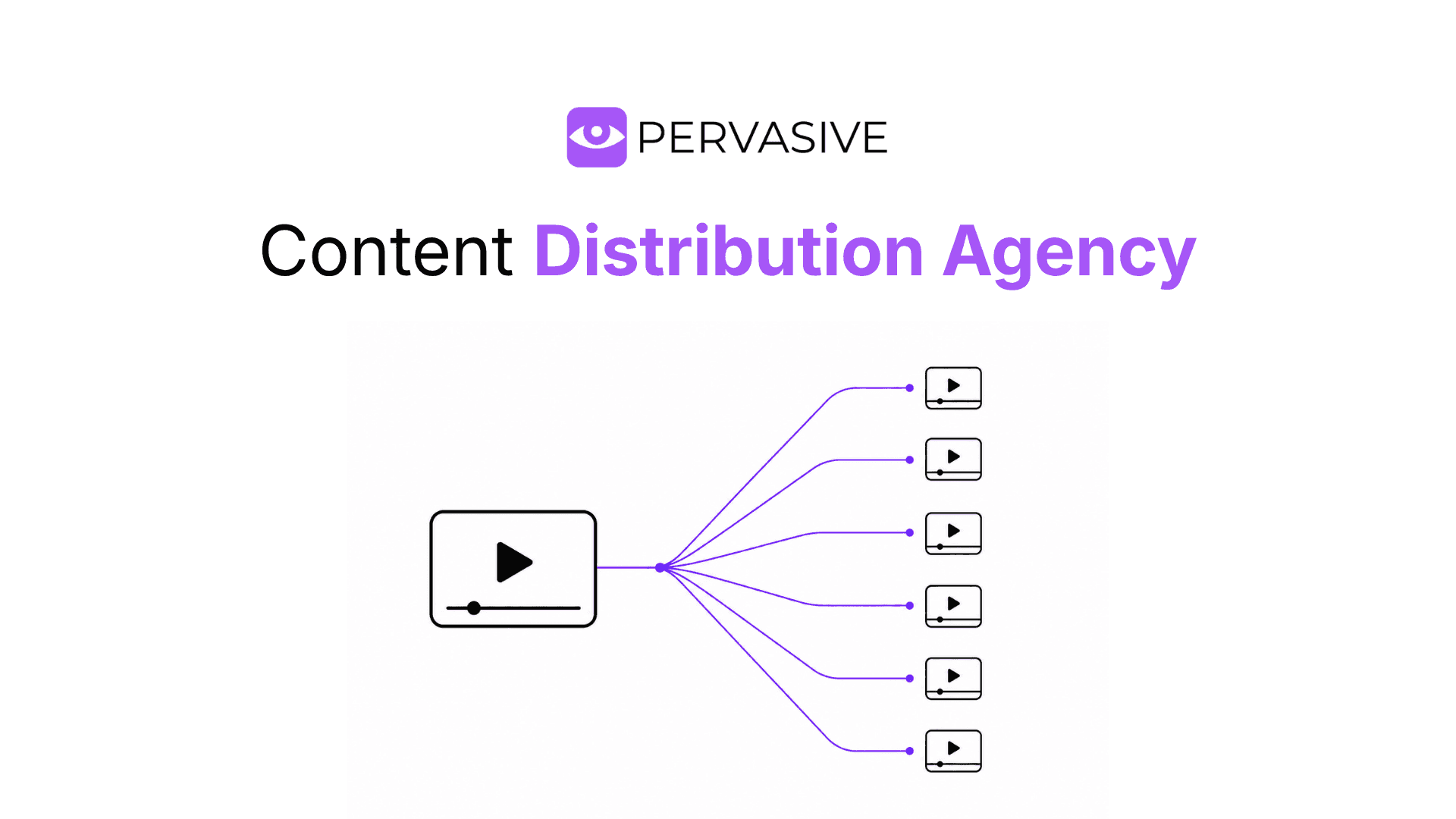
Create once. Distribute many times.
How Does a Content Distribution Agency Work?
A modern content distribution system typically has four stages:
1. Content Strategy
The first step is understanding the brand, the audience, the offer, and the original content.
A distribution strategy should answer questions such as:
Who are we trying to reach?
What topics are most relevant to that audience?
Which platforms should we prioritize?
Which content formats are most likely to perform?
What action should viewers take after discovering the content?
Without strategy, increasing content volume can simply create more noise.
2. Content Repurposing
The next step is turning existing long-form content into shorter pieces of content.
This can include:
Podcasts
YouTube videos
Interviews
Livestreams
Webinars
Talks
Educational videos
Founder content
Instead of treating a 60-minute video as one piece of content, a distribution agency looks at it as a content library.
One recording can potentially produce dozens of short-form videos.
This process is often referred to as content repurposing or content clipping.
3. Multi-Platform Distribution
Once the short-form content has been created, it needs to reach an audience.
The same content can be adapted for platforms such as:
TikTok
Instagram Reels
YouTube Shorts
Each platform has its own audience behavior, editing conventions, and recommendation system.
For this reason, effective distribution is not simply uploading the exact same video everywhere.
The goal is to create content that feels native to each platform while maintaining a consistent brand message.
4. Testing and Optimization
Distribution also creates something extremely valuable:
data.
Every published clip provides feedback.
Some hooks will outperform others.
Some topics will generate more engagement.
Some formats will consistently attract more views.
Over time, this information can be used to improve the next batch of content.
This turns content distribution into an ongoing feedback loop:
Create → Distribute → Measure → Learn → Improve.
Why Content Distribution Matters
One of the biggest problems in modern content marketing is not a lack of content.
It is a lack of distribution.
Brands and creators can spend hours producing a podcast episode, YouTube video, or interview and then promote it through only one social media account.
That creates a very limited number of opportunities for discovery.
Short-form content changes this equation.
Instead of relying on one piece of content to find an audience, you can create multiple short-form assets from the same source material and give each one a chance to reach a different audience.
This creates more shots on goal.
The objective is not necessarily to make every clip viral.
The objective is to increase the number of quality opportunities your content has to perform.
Content Distribution vs. Content Creation
Content creation and content distribution are two different functions.
Content creation is about producing the original asset.
Content distribution is about maximizing the number of people who can discover that asset.
For example, imagine a creator records a one-hour podcast episode.
The recording is the original content asset.
A distribution strategy could transform that episode into:
20 short-form clips
Multiple hooks
Different topics and angles
Platform-specific edits
Posts across TikTok, Instagram Reels, and YouTube Shorts
The creator has not necessarily created more original content.
They have simply extracted more distribution opportunities from the content they already created.
This is one of the main reasons content repurposing has become an important part of modern social media strategy.
What Services Does a Content Distribution Agency Provide?
The exact services depend on the agency, but a comprehensive content distribution strategy can include several components.
Short-Form Video Clipping
Long-form videos are analyzed to identify the strongest moments and transform them into short-form videos.
This includes editing, captions, pacing, hooks, formatting, and other creative decisions designed for short-form platforms.
Content Repurposing
Existing content can be transformed into multiple formats and assets rather than being used only once.
This allows brands to increase the return they get from every piece of original content they produce.
Multi-Platform Publishing
Content can be distributed across multiple social platforms instead of relying on a single channel.
This creates more opportunities for discovery and audience growth.
Distribution Networks
Some content distribution agencies go beyond publishing through a brand's existing social accounts.
They can build or manage networks of creators, editors, or distribution pages that publish content across multiple accounts.
This creates a much larger distribution surface.
Performance Tracking
A strong distribution system should also track performance.
Important metrics can include:
Views
Watch time
Engagement
Shares
Saves
Follower growth
Click-throughs
Leads
Conversions
The exact KPIs depend on the campaign's objective.
Why Clipping Is Part of Content Distribution
Clipping is one of the most effective ways to turn long-form content into a scalable distribution system.
A podcast, interview, livestream, or YouTube video can contain many individual moments that work independently as short-form content.
Instead of publishing the original content once, clipping allows a brand or creator to distribute multiple pieces of content from the same source.
For example:
1 podcast episode → multiple short-form clips → multiple platforms → multiple opportunities for discovery.
This is why clipping should not be viewed simply as video editing.
At scale, clipping becomes part of a broader content distribution strategy.
The editing creates the asset.
The distribution creates the opportunity for that asset to reach an audience.
Who Can Benefit From a Content Distribution Agency?
A content distribution agency can be useful for anyone who already has valuable content but wants to increase its reach.
Creators
YouTubers, streamers, educators, and personal brands can turn long-form content into a consistent short-form presence.
Podcasters
Podcasts are particularly well suited for content distribution because a single episode can contain numerous conversations, opinions, stories, and moments that can be repurposed.
Businesses and Brands
Brands can use short-form content to increase awareness and reach audiences organically across social media.
Founders and Entrepreneurs
Founder-led content can be distributed through short-form video to build authority, awareness, and an audience around the person behind the company.
Music Artists
Artists can distribute interviews, performances, stories, reactions, and other content around their music to create additional discovery opportunities.
What Makes a Good Content Distribution Strategy?
Producing more clips does not automatically mean producing better results.
A strong content distribution strategy combines volume with quality and iteration.
The most important elements are:
Consistency
Distribution works best when content is published consistently rather than in occasional bursts.
Volume
More high-quality content creates more opportunities to discover winning topics, hooks, and formats.
Creative Testing
Different hooks, edits, topics, and storytelling angles should be tested continuously.
Platform-Native Content
TikTok, Instagram Reels, and YouTube Shorts may all use vertical video, but audiences behave differently on each platform.
Data
Performance data should influence future creative decisions.
The goal is to build a system that gets smarter over time.
Content Distribution Agency vs. Social Media Agency
These two services can overlap, but they are not necessarily the same.
A traditional social media agency may focus on:
Social media management
Content calendars
Community management
Brand strategy
Posting
Creative direction
A content distribution agency is more focused on maximizing the reach and distribution of existing content.
For creators and brands producing a large amount of long-form content, this distinction can be particularly important.
Instead of asking:
“What should we post this week?”
the question becomes:
“How can we get more people to discover what we've already created?”
How Pervasive Clipping Approaches Content Distribution
At Pervasive Clipping, we approach clipping as a distribution problem, not simply an editing task.
The goal is to take existing long-form content and turn it into a scalable short-form distribution system.
We combine content strategy, short-form clipping, creative testing, and distribution through a network of creators.
The process starts with the client's existing content and goals.
From there, we identify potential content angles, develop creative directions, create short-form clips, and distribute them across platforms such as TikTok, Instagram Reels, and YouTube Shorts.
The result is a system designed to give every piece of content more opportunities to reach new audiences.
One piece of content should not have only one chance to perform.
The Future of Content Distribution
The amount of content being published online continues to increase.
For creators and brands, simply producing more content is not necessarily the answer.
The competitive advantage increasingly comes from building systems that can distribute, test, and optimize content at scale.
Short-form video is a particularly powerful part of this system because platforms such as TikTok, Instagram Reels, and YouTube Shorts are built around content discovery.
The brands and creators that learn how to consistently turn their existing content into new distribution opportunities can create a significant advantage.
Ultimately, content distribution is about one thing:
Getting more value from the content you've already created.
FAQ
What is a content distribution agency?
A content distribution agency helps brands and creators maximize the reach of their content by repurposing, publishing, and distributing it across multiple platforms and audiences.
What is the difference between content distribution and content creation?
Content creation focuses on producing the original content. Content distribution focuses on getting that content in front of as many relevant people as possible through strategic channels and platforms.
Is clipping part of content distribution?
Yes. Clipping is a common content distribution strategy that transforms long-form videos into short-form content that can be distributed across platforms such as TikTok, Instagram Reels, and YouTube Shorts.
Which platforms can content distribution agencies use?
Depending on the strategy, content can be distributed across TikTok, Instagram, YouTube, and other relevant social platforms.
Is content distribution useful for small creators?
Yes. A distribution system can be particularly useful for creators who already produce valuable long-form content but do not have the time or resources to consistently repurpose and distribute it themselves.
