End-to-End Content Distribution Services: What They Include
Discover what end-to-end content distribution services include and how brands can turn existing content into a scalable short-form distribution system.
Pervasive Clipping Team
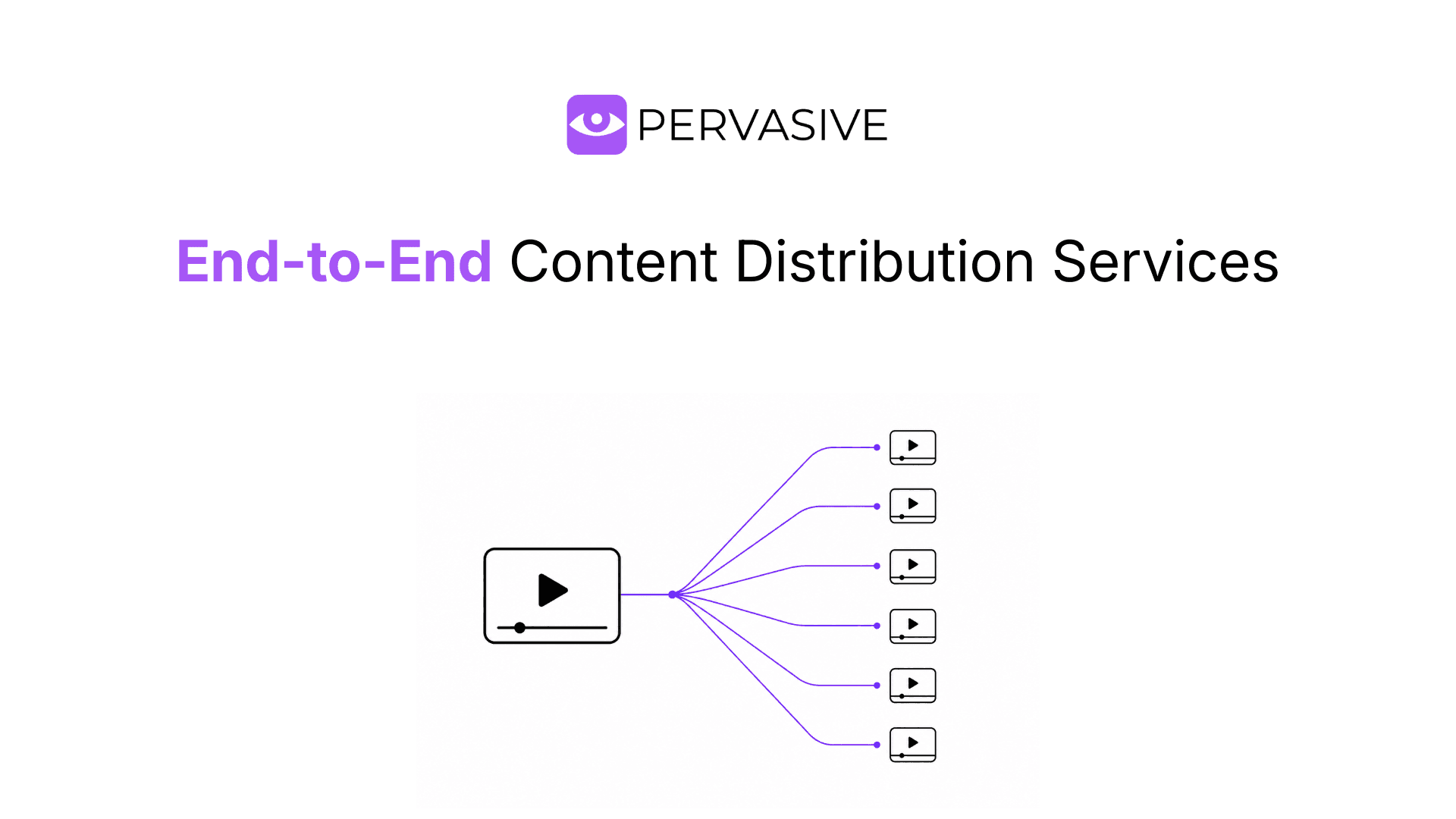
End-to-End Content Distribution Services: What They Include
Creating content is only one part of digital marketing.
The other part is making sure that content actually reaches people.
Many brands already have valuable assets sitting inside podcasts, YouTube channels, interviews, webinars and long-form videos.
The problem is distribution.
This is where end-to-end content distribution services can help.
Instead of hiring separate companies for editing, creator management, publishing and reporting, an end-to-end service manages the process as one system.
What Are End-to-End Content Distribution Services?
End-to-end content distribution services cover the process from the original content asset all the way through to distribution and performance analysis.
A typical system can include:
Content strategy
Content analysis
Clip selection
Short-form editing
Creative testing
Creator distribution
Platform publishing
Performance tracking
Campaign optimization
The exact process varies between providers.
The important difference is that distribution is treated as a complete system rather than a collection of disconnected tasks.
Why Content Distribution Matters
A great piece of content can still fail to reach an audience.
Imagine spending two hours recording a podcast episode.
You publish it on YouTube.
The episode gets some views.
Then the content is essentially finished.
But the episode may contain dozens of useful ideas.
Each one could become a separate short-form video.
Each short-form video creates another opportunity for someone to discover the original creator or brand.
This is the basic logic behind content distribution.
Step 1: Start With Existing Content
End-to-end distribution does not necessarily require creating more long-form content.
In many cases, the first step is analyzing what already exists.
Useful source material can include:
Podcasts
YouTube videos
Interviews
Webinars
Livestreams
Educational content
Talks
Product demonstrations
A strong content library can become the foundation for an entire distribution campaign.
Step 2: Identify Distribution Opportunities
Not every moment inside a long-form video should become a clip.
The goal is to find moments with standalone value.
For example:
A podcast episode about business could contain separate clips about hiring, marketing, mistakes, money and entrepreneurship.
Instead of treating the episode as one piece of content, the distribution strategy treats it as a collection of ideas.
Step 3: Turn Ideas Into Short-Form Content
The selected moments are then transformed into vertical videos.
This can include:
Editing
Captions
Hook optimization
Pacing
Visual changes
Context
Platform formatting
The objective is not to make the clip unnecessarily complicated.
It is to make the idea easy to understand and compelling enough to continue watching.
Step 4: Distribute Through Multiple Channels
Once the clips are ready, they can be distributed through platforms such as:
TikTok
Instagram Reels
YouTube Shorts
Multi-platform distribution increases the number of opportunities for discovery.
It also provides more performance data.
One concept may work exceptionally well on one platform and perform differently somewhere else.
Step 5: Test Different Creative Angles
One of the biggest advantages of scalable distribution is the ability to test.
The same underlying idea can sometimes be packaged with:
Different hooks
Different opening moments
Different captions
Different editing styles
Different storytelling structures
Instead of trying to predict the perfect video before publishing it, the campaign learns from actual audience behavior.
Step 6: Measure Performance
A serious content distribution campaign needs data.
Useful metrics may include:
Views
Engagement
Retention
Shares
Comments
Creator activity
Cost per view
Top-performing concepts
The purpose of analytics is not simply reporting.
It is deciding what should happen next.
Step 7: Double Down on What Works
If a particular topic repeatedly performs well, create more content around that topic.
If a particular hook performs better than others, test variations of it.
If certain concepts consistently underperform, reduce the resources allocated to them.
This creates a feedback loop:
Create → Distribute → Measure → Learn → Improve → Distribute again.
End-to-End Distribution vs Traditional Content Marketing
Traditional content marketing often focuses on producing new assets.
End-to-end distribution starts with a different question:
How much reach can we generate from the content we already have?
This does not mean creating new content is unnecessary.
It means the content production process should be connected to a distribution strategy.
Who Needs End-to-End Content Distribution?
This model can be particularly useful for:
Personal brands
Podcasts
YouTubers
SaaS companies
Founders
Coaches
Consultants
Media companies
B2B brands
The common factor is having valuable content but limited distribution capacity.
The Advantage of a Managed Distribution System
Managing distribution internally can become complicated quickly.
Someone needs to find clips.
Someone needs to edit them.
Someone needs to coordinate creators.
Someone needs to publish or monitor content.
Someone needs to analyze performance.
An end-to-end partner can bring these activities into one system.
That allows the brand or creator to focus on what they do best: creating valuable ideas.
Final Takeaway
End-to-end content distribution services connect content creation with audience discovery.
Instead of publishing a piece of content once and moving on, the content becomes an asset that can continue generating distribution opportunities.
For brands and creators with a strong existing content library, this can be a much more scalable approach to short-form growth.
