Performance-Based Content Distribution: How It Works
Performance-based content distribution connects campaign incentives to measurable outcomes. Learn how the model works, what should be measured, where it can fail, and how Pervasive Clipping approaches performance-driven campaigns.
Pervasive Clipping Team
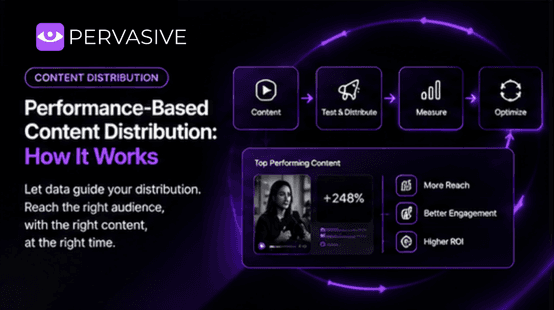
Performance-Based Content Distribution: How It Works
Performance-based distribution sounds simple:
You pay for results.
But defining and measuring those results is where things become more complicated.
At Pervasive Clipping, we believe performance-based campaigns should start with a clear definition of what “performance” actually means.
For some businesses, that means views.
For others, it could mean qualified reach, engagement, leads or another business outcome.
What is performance-based distribution?
Performance-based content distribution is a campaign model where some component of compensation, incentives or optimization is tied to measurable campaign performance.
In short-form content, performance might include:
views;
engagement;
reach;
published content;
creator performance;
other agreed campaign metrics.
The exact model varies.
Why businesses are interested in it
Traditional content services often charge for production.
That makes sense because production has predictable costs.
But businesses naturally want their spending to connect with outcomes.
Performance-based models attempt to create stronger alignment between:
campaign investment → distribution → measurable output
This can be attractive when a business wants to scale distribution without treating every clip as an isolated production expense.
The danger of vague performance metrics
“Pay for performance” isn't enough.
You need to define:
what counts as a view;
which platforms count;
when performance is measured;
how duplicate views are treated;
what happens with deleted posts;
what happens if content is reposted;
how creator performance is attributed.
Without clear definitions, performance-based campaigns can become difficult to evaluate.
Performance isn't always business impact
This is one of the most important distinctions.
A clip can receive millions of views without generating meaningful business results.
At the same time, a niche piece of content might generate fewer views but attract exactly the audience a business wants.
Therefore, the correct KPI depends on the objective.
If your objective is awareness, reach may matter most.
If the objective is demand generation, other metrics may be more relevant.
How Pervasive Clipping approaches performance
We start with campaign objectives.
Then we determine which metrics actually help evaluate progress toward those objectives.
This avoids the common mistake of choosing a metric first and trying to build the campaign around it.
Performance data also improves creative decisions
One of the most valuable aspects of performance data isn't the final report.
It's the feedback it provides.
Suppose you discover that:
founder stories outperform generic advice;
clips with questions perform better than statements;
certain creators consistently outperform others;
specific topics generate more engagement.
That information can influence the next batch of content.
Performance becomes a creative input.
Performance-based creator campaigns
Creator distribution can work particularly well with performance-based systems because individual creators generate measurable publishing data.
You can compare:
creator output;
average views;
engagement;
consistency;
topic performance.
But comparisons should always account for the context of each creator.
Not every audience is the same.
What should a business ask before starting?
Before agreeing to a performance-based campaign, ask:
What exactly counts as performance?
How is it measured?
Over what period?
Which platforms are included?
Who owns the content?
How are creators compensated?
What happens when content underperforms?
How often is reporting provided?
Clear answers make campaigns much easier to manage.
Is performance-based distribution right for everyone?
No.
Some businesses prefer predictable fixed costs.
Others are comfortable with variable campaign structures.
The important point is to choose the model based on the campaign, not because “performance-based” sounds better.
At Pervasive Clipping, we help clients understand the economics of their distribution strategy before deciding how the campaign should be structured.
Final takeaway
Performance-based distribution can create stronger alignment between campaign activity and measurable outcomes.
But it only works well when performance is clearly defined and the campaign is designed around reliable measurement.
If you're considering a performance-driven clipping campaign, book a call with Pervasive Clipping.
We can walk through the model, explain what should be measured and show you how we would structure the campaign around your specific content.
